B.Sc. in Fine Arts in Plastic Arts
Program Profile
The Department of Plastic Art (PcA) was established within the Faculty of Humanities in August 2012. His first and major academic program is the Bachelor of Fine Arts. The program received its first cohort of students in October 2012.
In 2023, the College of Fine Arts opened. a plastic arts department from one of its departments, in the College of Fine Arts.
The program is regularly designed and reviewed to meet the current and future needs of the Kurdistan Region and Iraq for qualified artists and art teaching staff. The curriculum adheres to the requirements of ABET and provides a balanced foundation across two fields of visual arts. Art Studio sessions enhance students' abilities in creativity and design, individual and team work, and practical technical skills.
The graduation project is a key design element of the program, fostering creative problem-solving and effective individual and team work. Internships, in turn, provide valuable opportunities for students to apply their knowledge in real-world environments. The internships also foster creative connections and help faculty stay engaged with the needs of the community, many of which can be met through student graduation projects.
In addition, the program includes a range of elective courses, allowing students to tailor their education according to their interests and changing market demands.
Occupational profiles of graduates
Graduates of this program have a strong foundation in the plastic arts of painting, sculpture, and ceramics. Their expertise in art, creativity, thought and technique, their problem-solving abilities, and their experience in working individually and collectively for diverse careers in the art, research and creativity industry are equipped while ensuring their ability to adapt to evolving art requirements.
Typical roles for graduates include:
1- Painting:
2- Sculpture:
Qualification awarded
Bachelor of Fine Arts in Plastic Arts
Length of programme
4 Years
Number of credits
240 ECTS credits
Mode of Study
Full time on campus
Read more about the programme
Get detailed information about the programme requirements, courses, credits, and educational objectives as a PDF file.
Program Educational Objectives (PEOs)
The Program Educational Objectives (POEs) of the Electrical and Computer Engineering department (ELCE) are to prepare graduates who will:
- Students engage their imagination, invent new forms, take risks, and solve visual problems Kurdistan Region and Iraq predictable, surprising ways.
- Through their commitment to inquiry, research, and experimentation, students define the formal and conceptual interests related to their own artistic process and vision.
- Students articulate a unique and rebellious voice in their work in relation to the past, present, and future of art and design.
- Students employ and integrate the technical skills, strategies, and critical thinking necessary to create cutting-edge works of art and design.
- Students determine and defend the role of art and design history in relation to their work and contemporary culture.
- Through their creative practice, students make meaningful connections with the diverse communities in which they live and work.
Program Learning Outcomes
After successfully completing this programmed, students should have:
1- Comprehensive Skill Development Students acquire a wide array of technical proficiencies in drawing, painting, sculpture, printmaking, ceramics, and digital art, essential for diverse artistic expression.
2- Cultivation of Critical and Creative Thinking Plastic arts education fosters problem-solving, decision-making, critical reflection, and innovative conceptualization, nurturing a unique artistic vision.
3- Enhanced Aesthetic Perception and Communication Programs emphasize understanding visual elements, art history, and the ability to articulate artistic concepts, enabling students to interpret and create meaningful art.
4- Effective Communication and Art Management Graduates are also equipped with strong communication skills, both in expressing their artistic vision and engaging with the art community. Some programs even cover art management and curating, providing essential knowledge for professional artists.
5- Professional Practice and Career Readiness Plastic arts programs prepare students to become independent practitioners in the international art scene. This includes developing skills for art management, understanding the business aspects of art, and effectively communicating with a broader audience.
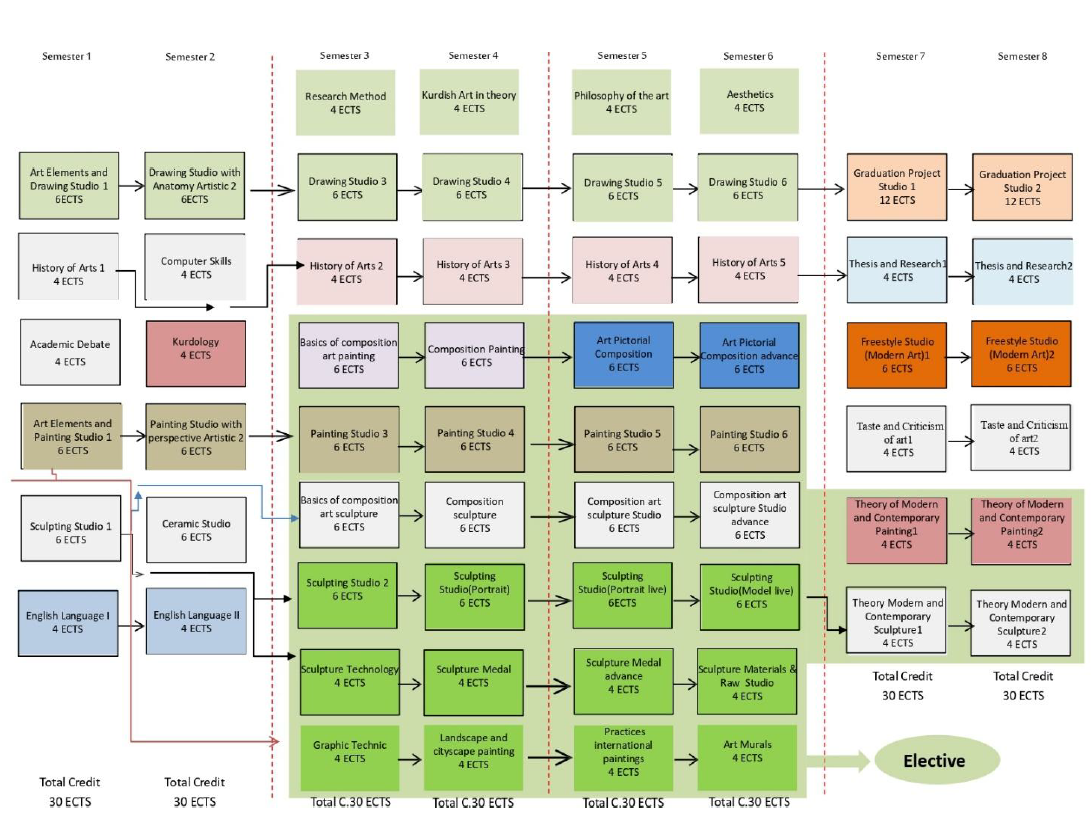
Programme structure diagram with credits
Yearly Timeline
Sept. 1, 2026
⚠️ First year students start around mid-October
⚠️ First year students start exams around 20 of January
July 1, 2027
Check out the full academic calendar on UoD's webstie.
Programme Coordinator

Assistant Lecturer in Contemporary Arts
Department of Plastic Arts
College of Fine Arts
University of Duhok
Apply to the Programme
Public undergraduate admissions in the KRG region are managed centrally by the Ministry of Higher Education through the online ZankoLine portal (regayzanko.com). After Grade 12 Baccalaureate results are released, high schools provide students with unique login credentials to rank their preferred universities and B.Sc. majors during a 10–14 day registration window. Final placement is automatically determined by the student's Grade 12 average, subject choices, and department capacity.